.png)


Have you ever downloaded a highly-rated SaaS tool, fully intending to transform how your business operates, only to abandon it 48 hours later? You are not alone. Let's be honest: the problem isn't your lack of discipline. It is a fundamental failure in behavior design.
We often assume that if we just "want" something badly enough, we will push through any obstacle to achieve it. But human psychology doesn't work that way. Motivation fluctuates. Simplicity scales. In this comprehensive guide, we will break down exactly how you can use the Fogg Behavior Model to eliminate user friction, increase your product conversions, and build systems that users actually love.
1. The Anatomy of the B=MAP Formula
At its core, the Fogg Behavior Model (FBM), introduced by Dr. BJ Fogg at Stanford University, states that human behavior is the deterministic product of three converging variables. If any single element is absent at the exact moment of action, the target behavior will inherently fail.
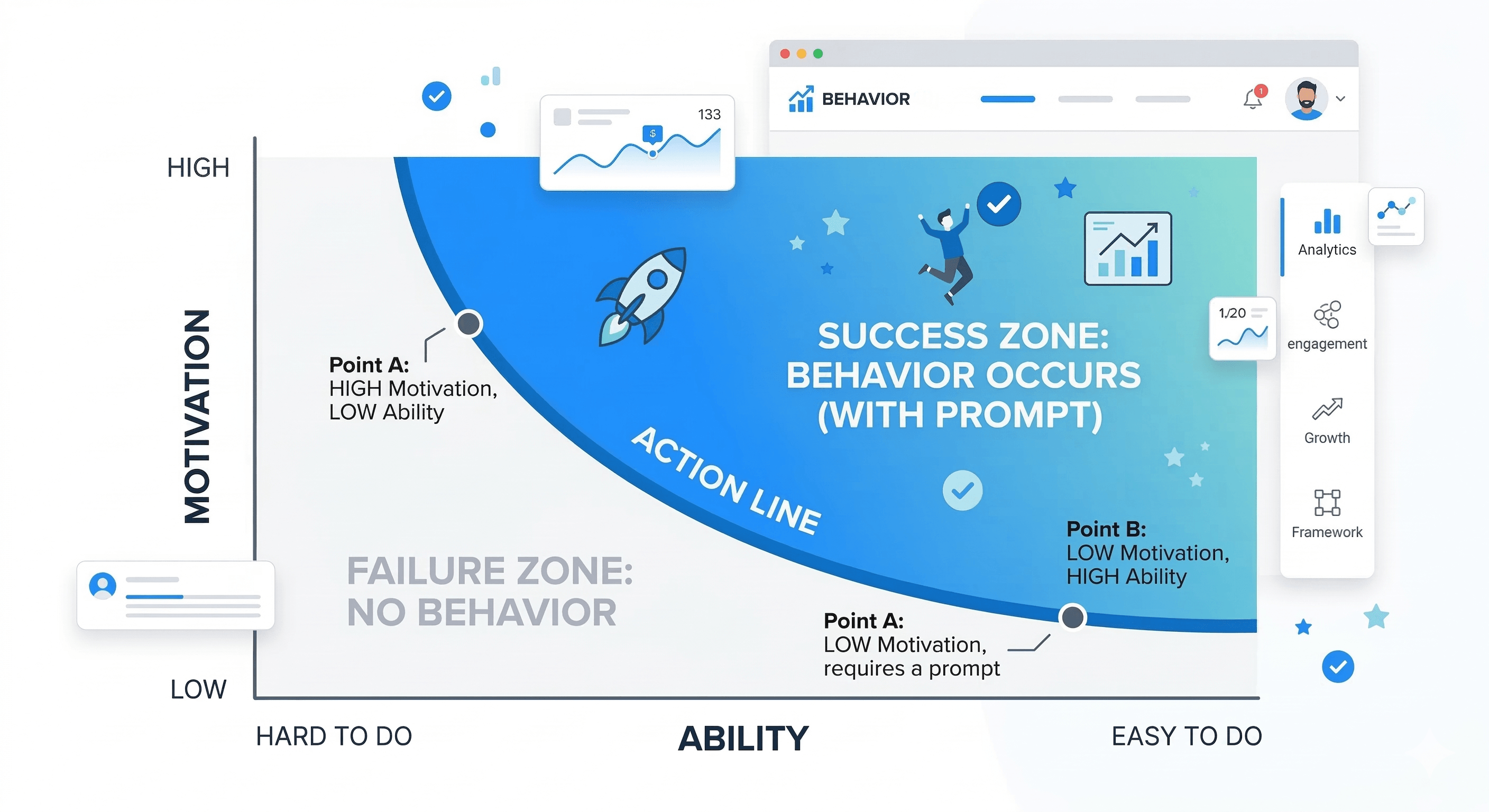
Motivation (The Drive): Fogg conceptualizes motivation through three "core motivators": Sensation (Pleasure/Pain), Anticipation (Hope/Fear), and Belonging (Acceptance/Rejection).
Ability (The Axis of Simplicity): Ability isn't about how smart your user is; it is entirely about the simplicity of the task. There are six factors: Time, Money, Physical Effort, Brain Cycles, Social Deviance, and Non-Routine actions.
Prompts (The Catalyst): Even with maximal motivation and infinite ability, a behavior will remain dormant without a prompt (Facilitator, Spark, or Signal).
2. Why Simplicity Beats Motivation Every Time
Trying to increase a user's motivation is like trying to catch lightning in a bottle. It is unpredictable and subject to rapid decay. The FBM proves that increasing ability—specifically by simplifying the target behavior—is a far more efficient and reliable mechanism for driving action.
"Motivation is a notoriously volatile metric, subject to rapid decay. Making an action incredibly simple is far more reliable than trying to artificially manufacture desire."
In SaaS onboarding, designers apply FBM principles by creating paths that relentlessly strip away cognitive load ("Brain Cycles"). Instead of overwhelming product tours, they use segmented walkthroughs.
3. Real-World Case Studies: SaaS and Healthcare
Does this actually work in practice? Analyzing specific, documented applications provides concrete evidence of its utility.
- SaaS Product-Led Growth: The success of freemium business models relies on manipulating FBM variables. By offering a core product for free, companies artificially maximize the user's Ability by removing the "Money" barrier. According to a documented scenario by M ACCELERATOR, optimizing these upfront financial frictions can drastically increase paid sign-ups.
- Healthcare Compliance: In a 2023 study published in JMIR regarding COPD patients, researchers utilized FBM principles to reduce the cognitive load of learning inhaler techniques and provide timely prompts, resulting in statistically significant improvements in adherence.
4. B=MAP for Habit Formation: The Tiny Habits Framework
While often used for software interfaces, the Fogg Behavior Model is equally powerful for personal development. Fogg’s "Tiny Habits" framework leverages B=MAP micro-behaviors.
Because big lifestyle changes require immense Motivation (which fails), the framework dictates scaling the behavior down until it requires virtually zero Ability. For example, instead of "working out for an hour," the behavior becomes "doing two push-ups after brushing your teeth." The existing habit acts as the Prompt, and the low effort guarantees Ability.
5. Comparative Analysis: FBM vs. The Hook Model
How does B=MAP stack up against other behavioral science frameworks? Let's compare the most popular models used by product managers today.
| Framework | Core Components | Primary Focus |
|---|---|---|
| Fogg Behavior Model | Motivation, Ability, Prompts | Immediate digital conversions & friction reduction |
| The Hook Model (Eyal) | Trigger, Action, Reward, Investment | Creating addictive or highly retentive habit loops |
| COM-B Model | Capability, Opportunity, Motivation | Macro public health interventions and policy |
6. Top 3 Mistakes Designers Make with B=MAP
Even with a solid understanding of the framework, many product teams fall into common traps during execution:
- Mistaking Motivation for Ability: Offering a 50% discount (Motivation) when the user physically cannot figure out how to navigate your checkout page (Ability). Fix the UI first.
- Mistimed Prompts: Sending a push notification (Prompt) to upgrade an account at 3:00 AM when the user is asleep (zero Ability) and annoyed (negative Motivation).
- Ignoring "Brain Cycles" in B2B: Assuming that corporate users will tolerate complex interfaces just because they are getting paid to use them. Cognitive load is the ultimate conversion killer in enterprise software.
7. The Dark Side: Ethics and Dark Patterns
Because the FBM operates effectively by bypassing deep cognition and eliminating the friction that prompts critical thinking, it is highly susceptible to ethical exploitation through "Dark Patterns".
By artificially injecting fear via fake countdown timers (manipulating Motivation) or obfuscating alternative choices in tiny text (lowering Ability), platforms compel behaviors like relinquishing private data. Ethical design must always prioritize "Facilitator Prompts" that align with the user's true goals.
8. Actionable UX Audit & The Gincore Solution
If your users aren't converting, or your internal team is failing to adopt a new process, the answer is almost always a lack of Ability. You need to reduce the "Brain Cycles" and "Time" required.
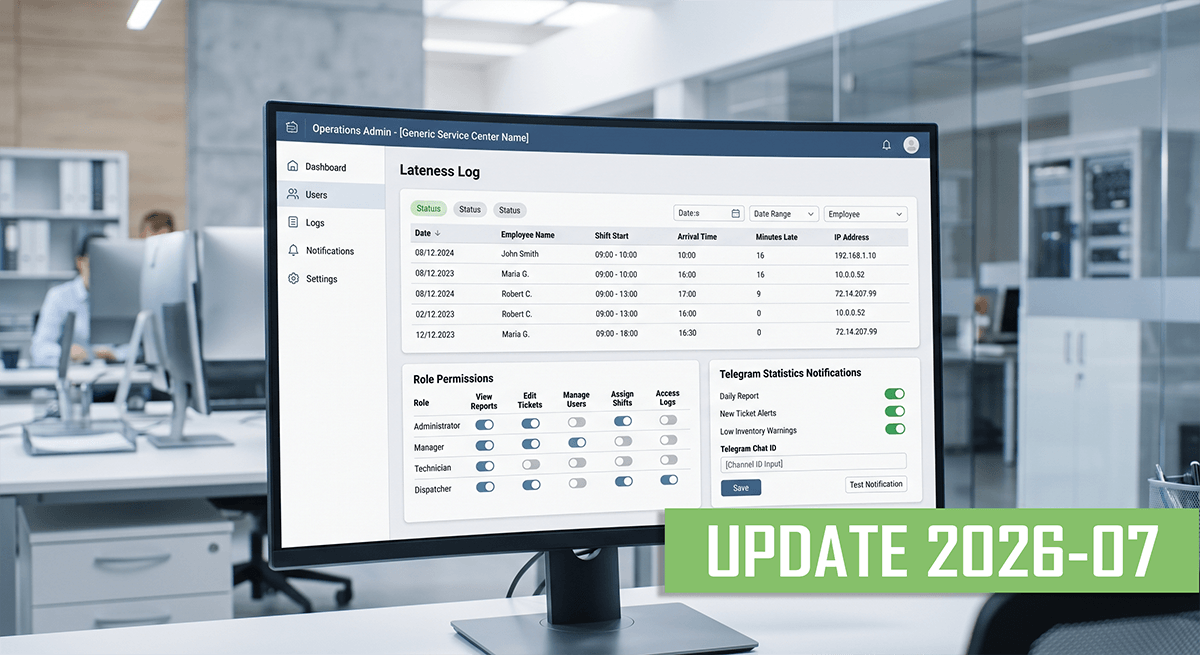
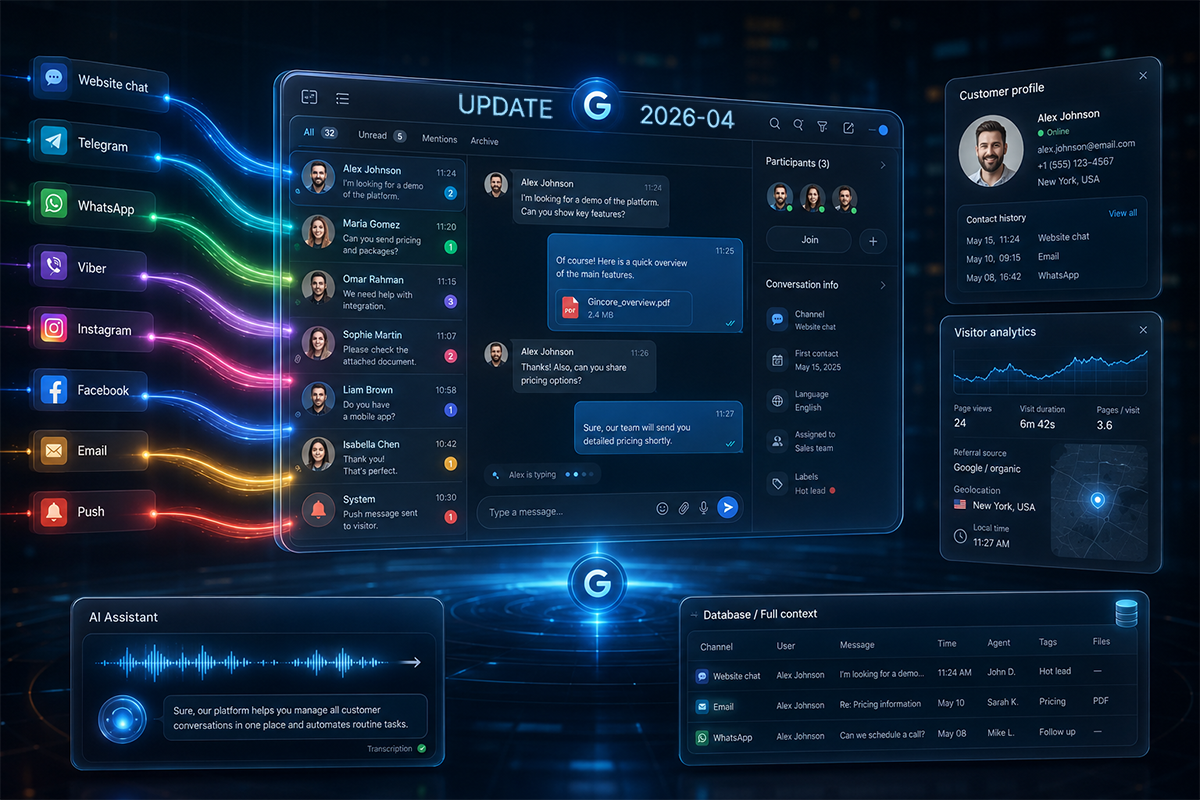
Notice how the Gincore dashboard consolidates inventory tracking, repair management, and CRM into a single view. By automating routine operations and centralizing communication, Gincore effectively eliminates the 'Brain Cycles' and 'Time' friction factors from your team's daily workflow. When a system is this simple, proper management behavior becomes automatic.
Instead of forcing your employees to learn complex, fragmented spreadsheets, provide them with an interface where the Ability to succeed is built-in.
9. Frequently Asked Questions (FAQ)
What is the Fogg Behavior Model formula?
The formula is B=MAP, which states that Behavior occurs when Motivation, Ability, and a Prompt converge at the exact same millisecond.
Why is Ability more important than Motivation in UX?
Motivation is a volatile metric subject to rapid decay. Humans naturally conserve mental energy. Therefore, making an action incredibly simple (increasing Ability by reducing friction) is far more reliable than trying to manufacture desire.
How does Gincore apply B=MAP principles?
Gincore applies the B=MAP formula by drastically increasing a team's "Ability" to manage complex tasks. By automating inventory and CRM processes, it reduces the necessary "Brain Cycles" and "Time," ensuring that correct business behaviors occur without relying on extreme motivation.